Advice · 5 min read
Repairing Versus Buying New Furniture
A practical comparison of cost, quality and lifespan before you replace a sofa.
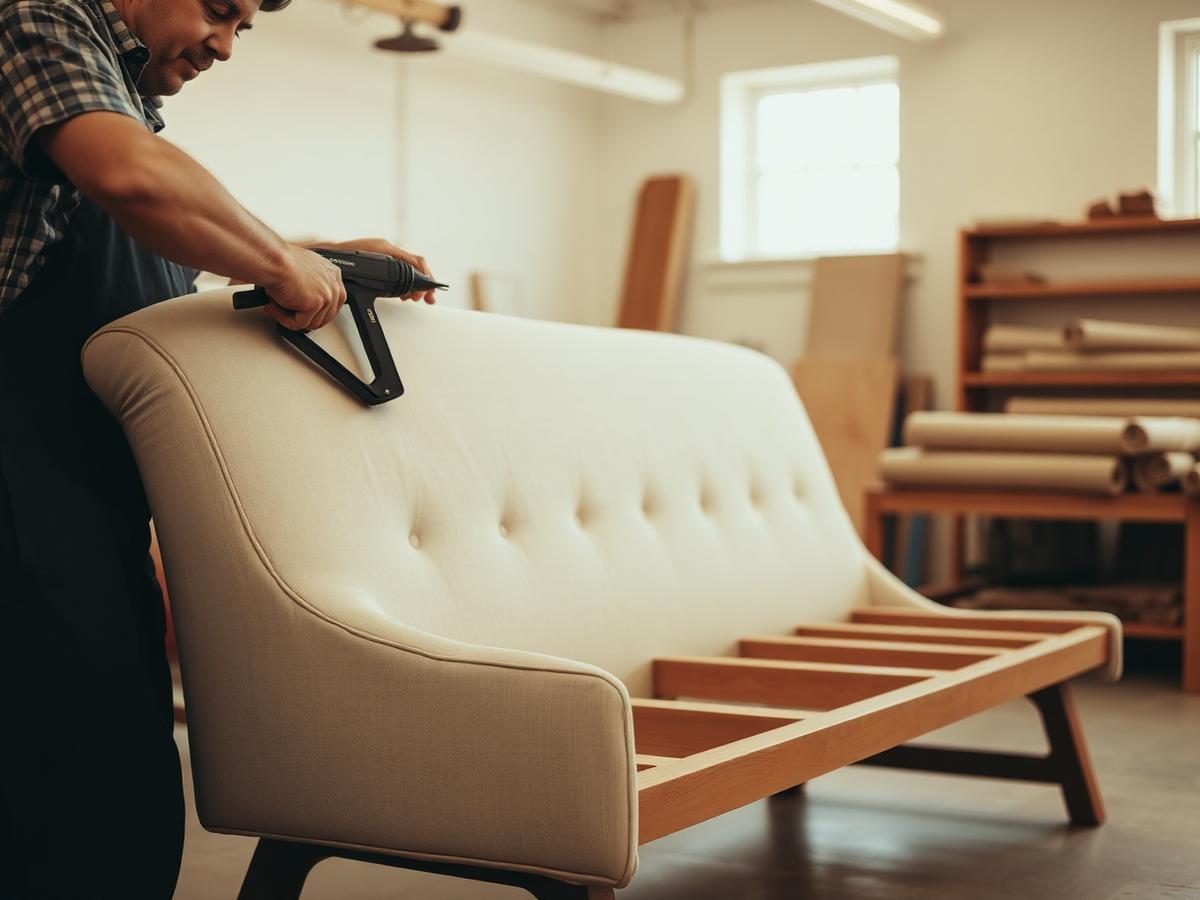
Replacing furniture is not always the cheaper or better option. The deciding factor is usually the frame: if the structure is sound, restoration almost always delivers more value than a new sofa at the same price point.
When restoration wins
Solid hardwood frames, jointed and glued rather than stapled particle board, are worth keeping. These frames often outlast several sets of fabric.
Bespoke or imported pieces, and furniture sized precisely for a room, are usually impossible to replace like for like.
When replacement makes sense
Frames made from low-grade board that has split or crumbled cannot be rebuilt reliably.
If you no longer like the shape or scale of the piece, custom-made furniture is a better use of the budget than reupholstering something you have outgrown.
The sustainability angle
Every restored sofa keeps a large item out of landfill and avoids the footprint of manufacturing and shipping a replacement.
For offices and hospitality clients, restoring existing seating is also far less disruptive than refitting an entire space.
Key takeaways
- A sound hardwood frame is the main reason to restore.
- Damaged particle board frames are usually not worth rebuilding.
- Custom-made is better than reupholstering the wrong shape.
- Restoration is the lower-waste option.